Sri Lanka’s Coconut Boom: Crossing $1 Billion in Export Revenue While Expanding Cultivation by 36,000 Acres
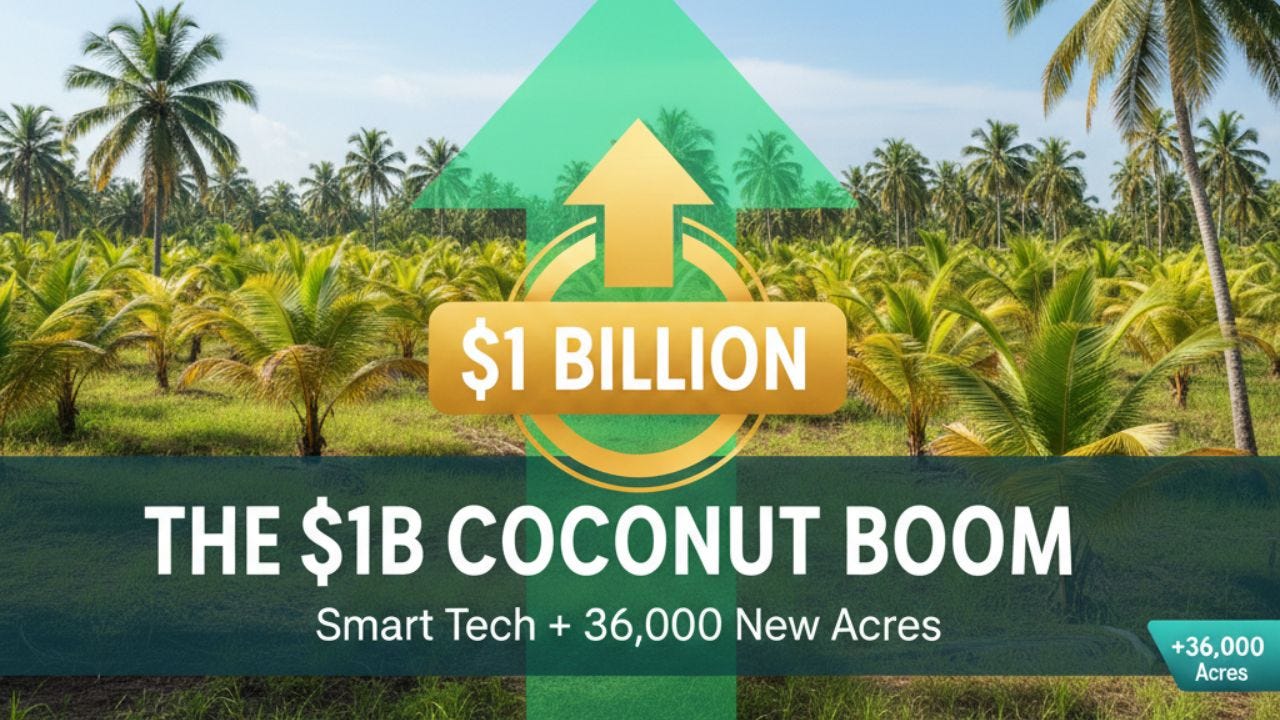
Sri Lanka, historically renowned for its rich coconut heritage, has reached a remarkable milestone in its agricultural export sector. In 2025, coconut and coconut-based products generated over USD 1 billion in export earnings for the first time in the nation’s history, marking a 43.8% increase compared with the same period in the previous year. This achievement reflects not only Sri Lanka’s deep agricultural roots but also a strategic transformation of its coconut sector, shifting from bulk raw coconuts to value-added products such as virgin coconut oil, coconut milk, desiccated coconut, coco peat, and activated carbon. At the same time, the government has launched an ambitious cultivation expansion plan, aiming to plant 36,000 new acres of coconut land, including a focused effort in the Northern Coconut Triangle, as part of its long-term growth blueprint.

Coconut & Global Markets
Coconuts today play a dual role in Sri Lanka’s economy, as a staple agricultural crop and a major export commodity. As of 2025:
- Coconut-based products now make up a significant share of national exports, contributing around 7.2% of total export earnings.
- Global demand for coconut products, from health foods to beauty and eco-friendly materials-has expanded rapidly.
- Products like virgin coconut oil, desiccated coconut, and advanced derivatives such as activated carbon and coco peat have found robust markets in the United States, Europe, Middle East, and increasingly in Asia.
Internationally, the coconut products market is projected to continue expanding, and sustainable agriculture trends. Sri Lankan exporters are increasingly integrating into these higher-value supply chains.
Can Small-Scale Coconut Farmers Compete in Global Export Markets?
Challenges for Smallholders
While export revenues soar, the role of small-scale coconut farmers, who account for the lion’s share of production remains critical and complex.
Key Challenges:
- Land fragmentation and aging plantations: Many smallholders manage small blocks of land, and aging trees reduce overall productivity.
- Limited access to modern inputs: Despite subsidy schemes for fertilizer, resource constraints curb yield potential.
- Climate fluctuations: Extended droughts or unpredictable rainfall patterns affect yields and reliability.
- Rising costs: Inputs, labor shortages, and market volatility squeeze smallholder margins.
- Market linkages: Small-scale farms often lack direct access to processing and export facilities, limiting their share of value addition.
These factors make it difficult for small growers to scale or compete directly in export-oriented supply chains dominated by larger processors and exporters.
How Smart Agriculture Can Improve Coconut Cultivation
As Sri Lanka’s coconut sector modernizes, smart agriculture — integrating data, IoT, and precision tools, emerges as a major enabler of productivity and sustainability.
Benefits of Smart Agriculture
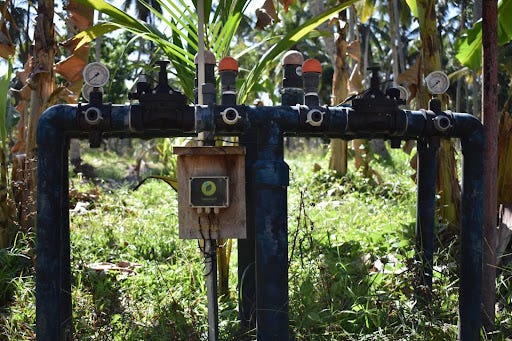
- Soil Moisture & Irrigation Management: Precision sensors help farms optimize water use, especially in drought-prone zones, reducing stress on palm health.
- Disease & Pest Monitoring: Digital tools allow early detection and treatment, safeguarding yields.
- Input Efficiency: Smart systems enable precise fertilizer application, reducing costs and environmental impact.
- Traceability: Data-driven recordkeeping supports quality standards required by global buyers.
SenzAgro Solutions: Modernizing Coconut Cultivation
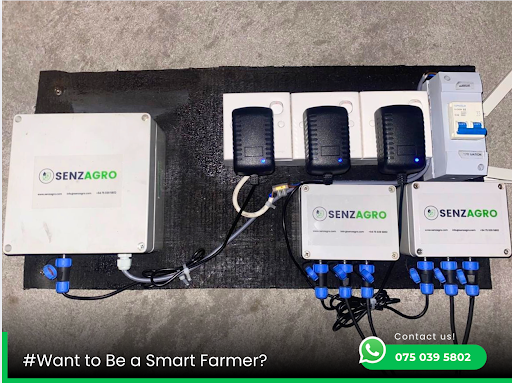
Among the innovative technologies helping transform Sri Lankan coconut farming is SenzAgro Solutions, a provider of IoT-based agricultural platforms designed to assist farmers in optimizing productivity and sustainability.
What SenzAgro Offers:
- Real-Time Monitoring: Soil moisture, climate variables, and crop conditions delivered to farmers via mobile dashboards.
- Remote Irrigation Control: Automated irrigation scheduling helps reduce cost and water usage.
- Data Analytics: Field-level recommendations improve yield outcomes and resource planning.
These technologies empower farmers with actionable insights, from early stress detection to optimized irrigation, bridging the gap between traditional farming and modern precision agriculture.
Success Stories & Practical Impact
Across Sri Lanka, early adopters of smart agriculture have seen tangible improvements:
- Yield increases: Farms using sensor-based irrigation saw better nut production despite dry conditions.
- Cost reductions: Optimized smart irrigation methods cut operational expenses and labourer costs..
- Reduction of water wastage: Maximum use of water with most efficient water application modes like drip irrigation
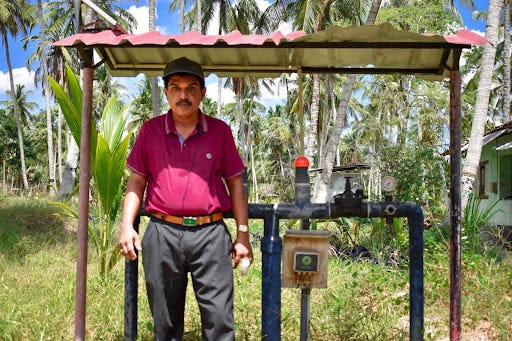
Though data is still emerging, pilot implementations of SenzAgro and similar platforms demonstrate how technology can uplift both smallholders and commercial growers, enabling them to participate more effectively in value-added export chains.
Conclusion
As Sri Lanka celebrates a historic milestone in coconut export earnings and embarks on large-scale cultivation expansion, the message to planters is clear: growth must be smart to be sustainable. By embracing modern agricultural technologies and proven solutions such as SenzAgro’s, the coconut industry can secure its position as one of the country’s most powerful drivers of rural development, export growth, and long-term economic resilience.
The future of Sri Lanka’s coconut industry lies not only in more land, but in smarter land, smarter decisions, and smarter farming
