When X-Ray Machines Go Silent — And Patients Wait

It’s 3:15 PM in the radiology department. The waiting room hums with quiet tension. An elderly man shifts uncomfortably in his chair, clutching his referral slip. A young mother bounces her toddler on her knee, glancing anxiously at the clock. Behind the scenes, a nurse steps out of the X-ray room, offering an apologetic smile.
“The machine is down. We’ll have to reschedule.”
It’s not the first time this has happened today.
The Chain Reaction of X-Ray Machine Downtime
When an X-ray machine falls silent, the consequences ripple outward:
- Patients wait longer — sometimes hours, sometimes days — for imaging that may confirm or rule out a critical diagnosis.
- Anxiety builds, as the unknown lingers longer than it should.
- Staff scramble, rearranging schedules, calming worried families, and coordinating with other facilities for urgent cases.
- Workload piles up, as cancelled scans become tomorrow’s backlog.
In healthcare, even a short delay caused by x-ray machine downtime can alter patient outcomes. A postponed scan means a delayed diagnosis — and that can make all the difference.
The Cost of Medical Imaging Equipment Maintenance Failures
Medical imaging downtime remains costly in 2025. According to Simbo AI (2025), annual maintenance averages around $37,500 for X-ray systems and can exceed $120,000 for MRI machines. Data from the Ponemon Institute, cited by Simbo AI (2025), shows that unplanned IT/RIS outages may cost healthcare providers up to $17,244 per minute. The 2025 Service Benchmark Report by Aquant, highlighted in 24x7 Magazine, reveals that failed first service visits can add 12 days to resolution times and increase costs by ~87% per work order. Meanwhile, a 2025 study published in the American Journal of Roentgenology found that equipment-related incidents in radiology rose from ~10% in 2021 to ~25% in 2023. Together, these insights reinforce the urgent need for proactive monitoring, predictive maintenance, and smarter service strategies to safeguard both financial performance and patient care.
What If Predictive Maintenance in Healthcare Could Prevent Downtime?
But what if that silent machine could tell us something before it lets everyone down? What if, days before failure, it could whisper to the technicians:
“Hey, something’s off — please fix me before patients have to wait.”
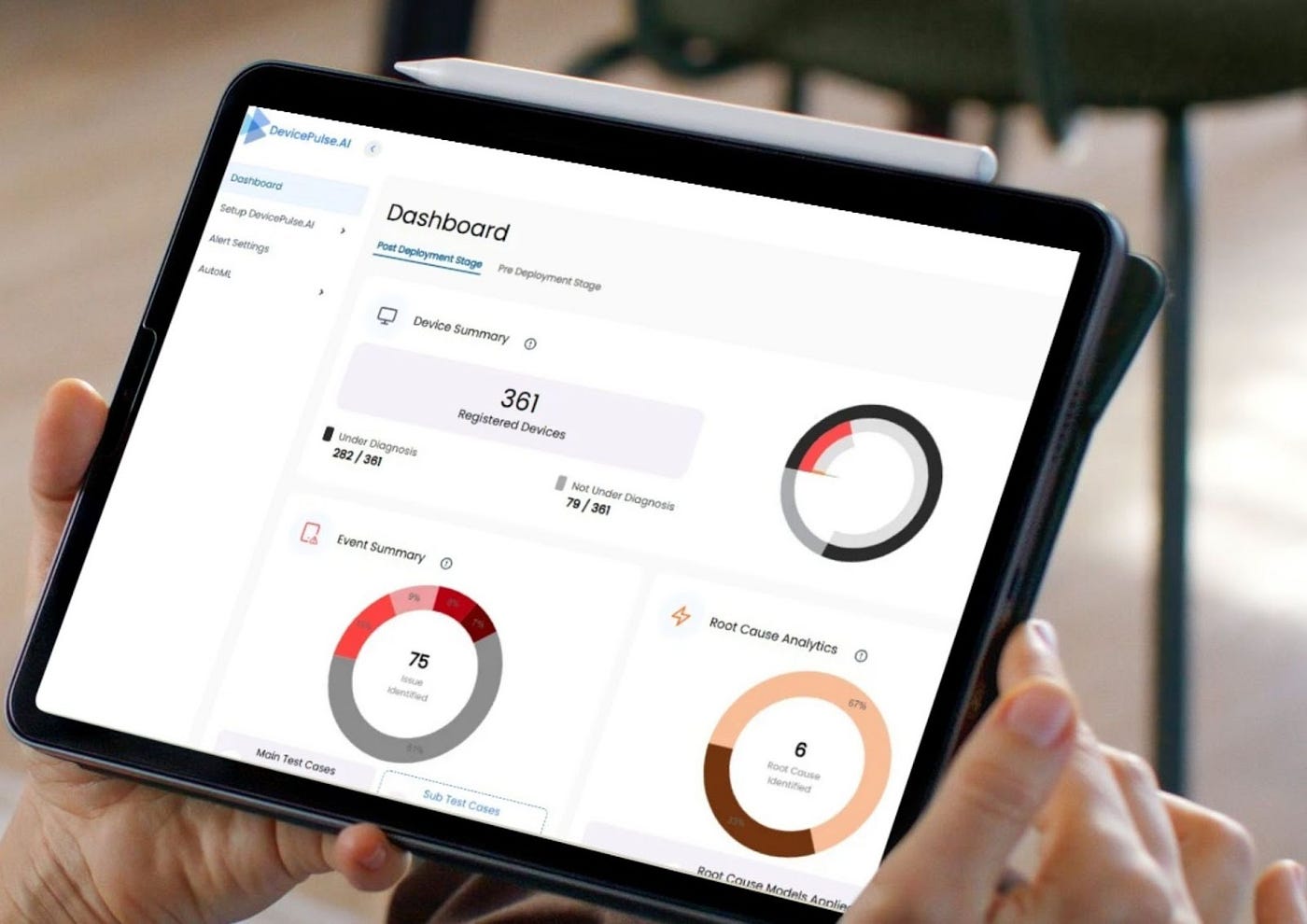
That’s where DevicePulse.AI comes in.
A part of SenzMate’s AIoT platform, DevicePulse.AI offers:
- AI-powered predictive maintenance in healthcare, spotting anomalies before they become full-blown failures.
- Real-time monitoring of vital metrics — temperature, battery, signal strength — and customizable, automated test cases.
- Immediate, context-aware alerts and diagnostic insights the moment something goes out of bounds.
- An intelligent AI Navigator chatbot that guides technicians through troubleshooting — step by step, using device history and knowledge bases.
- Seamless integration with IoT platforms like Azure IoT Hub, AWS IoT, or SenzMatica itself.
Imagine: instead of sitting idle, the X-ray machine flags an internal issue hours before failure. Technicians receive an alert via WhatsApp or email. The AI Navigator suggests the root cause and step-by-step fix — perhaps a sensor recalibration or firmware update. The team resolves it before it disrupts a single patient’s care journey.
Because in healthcare, silence should mean only one thing.
In medical imaging, downtime isn’t merely inconvenient — it can be dangerous. Every minute a scanner or imaging device is offline can delay diagnoses, postpone treatments, and put patients at risk. But when machines can “talk” — sharing real-time performance data, predicting issues, and alerting technicians before failures occur — patients don’t have to wait.
DevicePulse.AI makes that a reality.
hello@senzmate.com — Talk to us about keeping your medical equipment online, all the time.
