Tourism in the AI Era: How Chatbots Are Enhancing Travel Experiences

Facing the Challenges of Modern Travel?
Are slow responses, repetitive queries, and limited support hours frustrating your customers and your staff? In today’s fast-paced travel industry, these pain points are more than inconveniences, they can cost bookings and damage your brand reputation.
Such challenges can lead to lost bookings and frustrated customers. AI chatbots help by responding instantly around the clock, managing repetitive questions, and providing tailored travel recommendations, enhancing customer experience while allowing staff to concentrate on higher-priority tasks.
The Evolution of Travel Customer Service
Traditionally, tourism businesses relied heavily on human agents and call centers to manage customer support. However, this approach came with challenges:
- Repetitive inquiries overwhelmed support teams.
- Time zone differences limited support availability.
- Language barriers hindered communication with global travelers.
With the adoption of AI chatbots, these challenges are being addressed more effectively. These virtual assistants can respond instantly, operate 24/7, and support multiple languages; making them ideal for the global nature of the travel industry.
How AI Chatbots Improve the Travel Experience
Modern AI chatbots, powered by LLMs (Large Language Models) act as the “brain” that understands and generates human-like responses. and Machine Learning (ML), can now understand context, anticipate needs, and respond in a human-like manner. They help travelers discover destinations based on their preferences, arrange bookings for flights, hotels, and activities, and provide timely updates on everything from flight delays to local weather changes. By taking care of routine queries and logistics, they reduce traveler stress and build trust in the brands that use them.
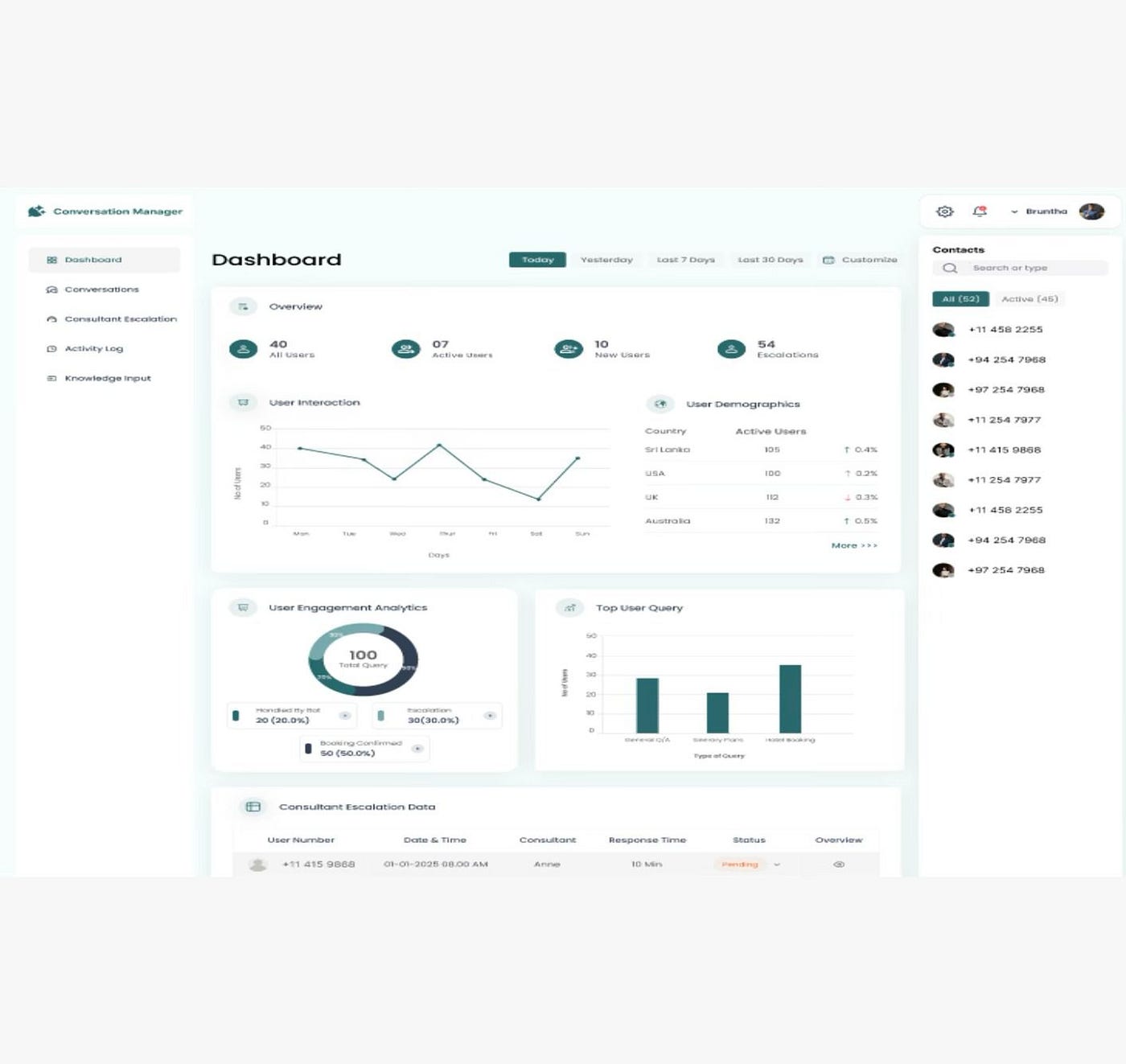
Here’s how AI chatbots are enhancing travel:
- Personalized itinerary suggestions based on preferences, budget, and interests.
- Seamless booking assistance for packages, hotels, and activities.
- Real-time updates on flight changes, delays, and local weather.
- Instant answers to frequently asked questions.
- Follow-ups Increase customer engagement through timely follow-ups
These capabilities not only reduce stress for travelers but also increase trust and satisfaction with travel brands.
Business Benefits for Tourism Companies
For tourism companies, the advantages are clear. Chatbots automate routine inquiries, cut operational costs, and provide scalable service without adding headcount. They enable around-the-clock assistance across different time zones and languages while gathering valuable data on customer behavior. This not only helps refine marketing and service strategies but also frees human agents to focus on more complex or sensitive customer needs.

Key advantages include:
- Cost reduction through automation of routine queries.
- Scalable service without hiring additional staff.
- 24/7 customer support across all time zones.
- Multilingual communication for a global audience.
- Data insights into customer behavior and preferences.
- Boost conversion rates by sending timely, personalized follow-ups to potential and existing customers.
With chatbots handling routine tasks, human agents are freed up to manage more complex or sensitive cases leading to a better overall support system.
Supporting the Traveler at Every Stage
One of the most powerful aspects of tourism chatbots is their ability to support customers at every step of their journey
One of the most compelling benefits of AI chatbots is their ability to remain present throughout the customer journey. Before a trip, they can suggest destinations, assist with visa or travel requirements, and create personalized itineraries. During travel, they act as real-time guides, offering navigation tips, local recommendations, and immediate assistance with changes or disruptions. After the journey, they can request feedback, share loyalty rewards, and promote future travel deals keeping the connection alive long after the traveler returns home.
By being present throughout the travel cycle, AI chatbots ensure consistency in service and communication, ultimately boosting brand loyalty.
Gartner Insights (Callout Box)
Gartner says: 98% of organizations have already incorporated or plan to incorporate AI into their customer engagement strategies.
According to Gartner: 80% of companies using AI leverage conversational agents, such as chatbots, to enhance customer interactions.
Gartner reports: Organizations adopting AI have seen improvements in:
- 71% improved data-driven customer insights
- 56% enhanced lead generation
- 51% more proactive, personalized service
Looking ahead, Gartner notes: 85% of customer service leaders plan to explore or pilot customer-facing conversational AI solutions, like generative AI chatbots, by 2025.
Additional Industry Insights
- McKinsey & Company McKinsey’s research indicates that nearly 80% of American travelers experienced at least one travel-related problem in the first half of 2023, underscoring the need for improved customer service in the travel industry.
- Forrester Research According to Forrester, over 50% of customer service interactions will be handled by AI within the next two years, highlighting the growing reliance on AI in customer service.
- PwC PwC’s report reveals that sectors facing heavy disruption, such as travel and hospitality, are also the biggest proponents and users of AI, with 52% of companies accelerating their AI adoption plans due to the pandemic.
- Deloitte Deloitte’s 2024 Travel Industry Outlook emphasizes the impact of generative AI on customer service and marketing strategies, with travel industry companies increasingly using AI for customer service, operations optimization, predictive maintenance, shopping, and discovery.
- Statista Statista’s data shows that customer service chatbots are the most common form of generative AI support used by the travel industry, according to an Amadeus study.
Challenges and Limitations
Balancing Automation with the Human Touch
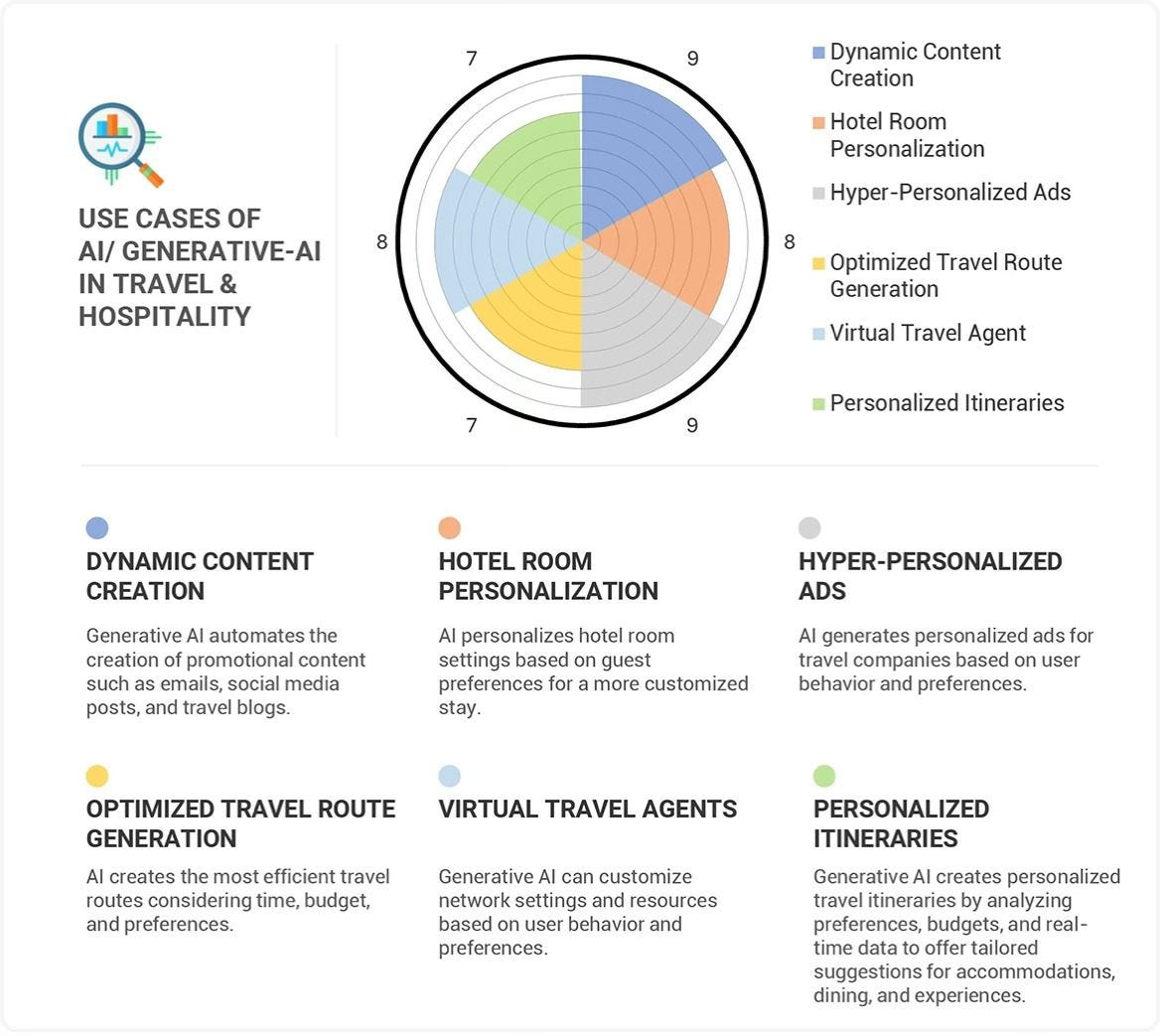
While chatbots excel at efficiency, they are not a complete replacement for human interaction. Emotional or complex issues still require human empathy and judgment. To address this, forward-thinking travel businesses ensure their chatbots have smart escalation paths to human agents, continuously improve AI performance using real customer interactions, and uphold strict data privacy standards.
The key is to strike a balance — letting automation handle the routine while keeping human support available for deeper interactions.
The Future of AI in Tourism
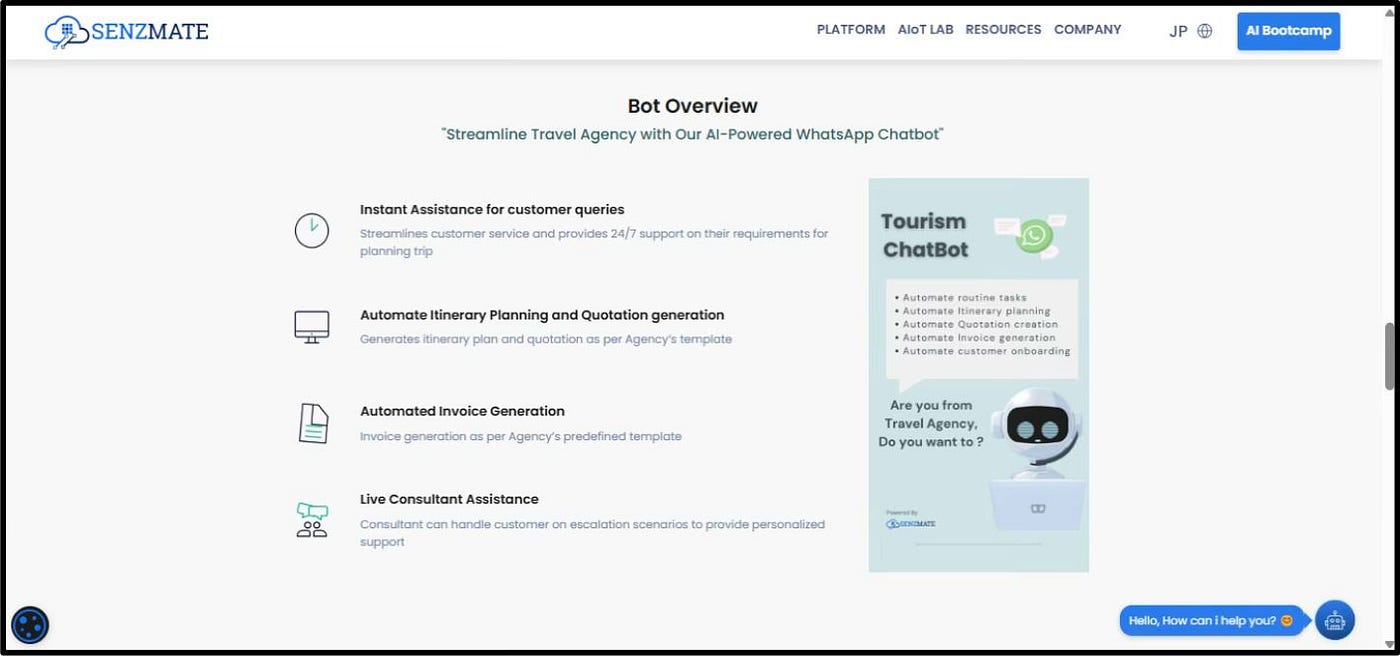
The next chapter of AI in tourism will be even more immersive. Expect voice-enabled virtual travel assistants, AI-powered city guides enhanced with augmented reality, predictive booking systems that anticipate traveler needs, and hyper-personalized marketing tailored to individual behaviors. These advancements will not just enhance customer service — they will fundamentally change how travel businesses operate in the digital age.
These innovations will not only improve customer experience but also redefine how travel businesses operate in the digital age.
Final Thoughts
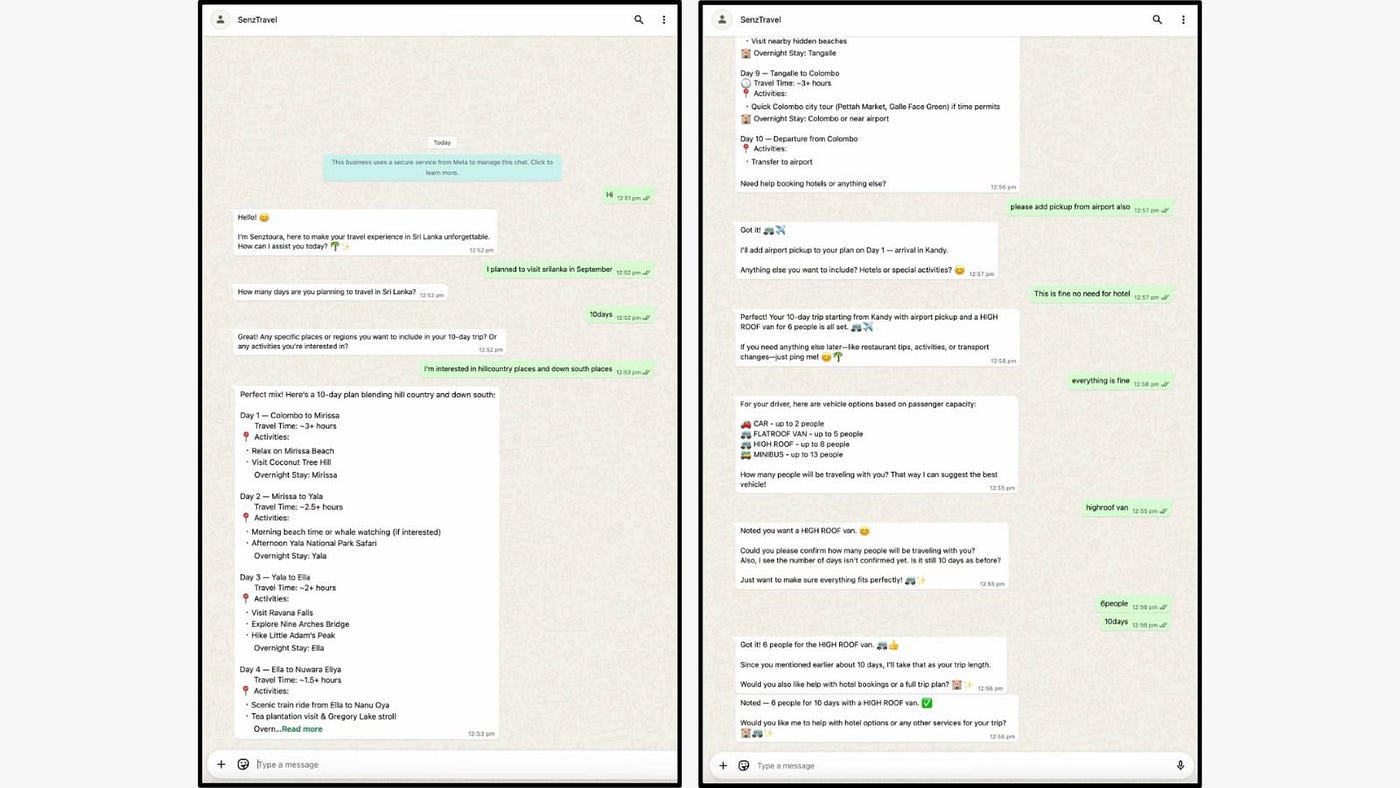
AI chatbots are no longer just an emerging trend, they’re a necessity for modern tourism. They help businesses meet customer expectations, scale operations efficiently, and stay competitive in a fast-moving industry. For travelers, they offer convenience, personalization, and peace of mind.
SenzToura, our advanced tourism chatbot, takes this a step further by providing 24/7 instant support, smart itinerary suggestions, automated follow-ups, and a centralized dashboard for managing customer interactions. By integrating SenzToura, travel businesses can deliver seamless, personalized experiences while reducing operational load.
As the tourism sector continues to recover and grow, businesses that embrace AI-driven solutions like SenzToura will lead the way offering smarter, faster, and more human-like service, powered by machines.
