Revolutionizing Coconut Cultivation in Sri Lanka Through IoT-Based Solutions by SenzAgro
Background
Sri Lanka, often celebrated for its tea and spices, is also home to one of the most culturally and economically important crops, coconut. With over 445,000 hectares under coconut cultivation, the crop contributes around 2% to the national GDP and supports the livelihoods of nearly 700,000 families. From traditional dishes to construction, household items, and exports, coconut remains deeply embedded in the island’s rural life and economy.
Historically, the “Coconut Triangle” spanning Kurunegala, Puttalam, and Gampaha has been the heartland of cultivation. However, with increasing land pressure and climatic challenges in the western and southern belts, the Northern region of Sri Lanka including districts like Kilinochchi, Mullaitivu, Vavuniya, and Jaffna is emerging as a frontier for coconut expansion. These areas, once impacted by conflict, now present a unique opportunity for agricultural regeneration, particularly with coconut due to its adaptability to dry zones and sandy loam soils commonly found in the north.
Despite its potential, much of the coconut cultivation across the country still relies on traditional practices, with limited integration of modern technology. Current interventions mainly involve basic mechanization, conventional fertilizers, and occasional research-led varietal improvements. Yet, a transformation is underway. The sector is gradually embracing digital agriculture, with IoT-based solutions, precision irrigation, mobile apps, and sensor-based monitoring beginning to take root especially among progressive growers and institutional partners. At the forefront of this transition is SenzAgro Solutions, a pioneer in delivering IoT-enabled precision farming tools tailored for plantation crops like coconut. By integrating data-driven decision-making into traditional systems, SenzAgro is not only boosting productivity but also enabling sustainable, climate-resilient farming models across regions including the underutilized Northern zones.
Coconut cultivation in Sri Lanka faces several specific and interrelated challenges, which impact productivity, profitability, and sustainability. The main challenges, can be categorized as follows:
- Climate Change & Drought Stress
- Soil Degradation & Poor Fertility
- Pests and Diseases
- Aging Coconut Plantations
- Price fluctuations in local and global markets directly affect farmer income.
- High Cost of Inputs
- Limited Adoption of Modern Practices
- Inadequate Irrigation Infrastructure
- Poor Access to Extension Services
- Lack of Data & Traceability
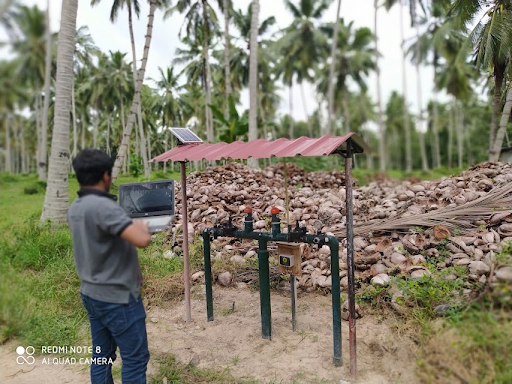
Irrigation is a critical issue in coconut cultivation, especially as the crop expands into Sri Lanka’s dry and intermediate zones, including parts of the North. Therefore we can focus on the key factors which farmers are faced with and the solutions which SenzAgro Solution has taken to solve those issues according to the deployments which we have taken for the different farmer fields.
Irrigation Challenges in Coconut Cultivation
- Many coconut-growing regions, especially in the dry zone, face seasonal water scarcity. Extended dry periods (3–6 months) can reduce nut yield by 30–50% if not managed with supplemental irrigation.
2. Inefficient Traditional Irrigation Methods
- Farmers often use manual or flood irrigation, which leads to:
3. Lack of Real-Time Soil Moisture Monitoring
- Without data, farmers over- or under-irrigate, both of which stress the plant and soil moisture needs vary by palm age, soil type, and weather patterns which are often not considered.
4. High Cost of Water amp; Energy
- Pumping groundwater or maintaining surface water tanks incurs diesel or electricity costs. Also without optimization, irrigation becomes expensive and unsustainable.
5. Labor Shortages
- Manual irrigation requires consistent labor, which is becoming scarce and costly in many rural areas.
How IoT-Based SenzAgro Irrigation amp; Automation Solves These Challenges
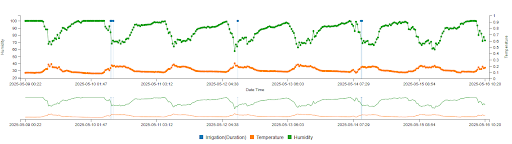
Solution: Install IoT-enabled soil moisture sensors at the accurate depth and climate sensors (for rainfall, temperature, humidity). (Figure 01)
- Benefit: Real-time data on when and how much to irrigate.
- Result: Prevents over-irrigation, reduces water waste, and improves root zone hydration.
2. Automated/Smart Irrigation Systems
Solution: Use automated drip or sprinkler systems integrated with IoT controllers and scheduling software.
- Benefit: According to the figure 01, can identify that the Irrigation can be automated based on soil moisture thresholds, evapotranspiration (ET) models, or crop stage.
- Result: Water is applied precisely and efficiently, even when farmers are not on-site.
3. Scheduled Irrigation via Mobile Dashboard
Solution: Platforms like SenzAgro’s mobile/web app allow farmers to:
- Set irrigation schedules, Monitor water usage and Get alerts for dry conditions or system malfunctions (Figure 01)
- Benefit: Saves time, improves consistency, and reduces dependency on manual labor.
4. Data-Driven Decision Support
Solution: Combine IoT data with AI/ML analytics for personalized recommendations:
- Weekly irrigation plans based on weather forecasts and warnings during dry spells or high evapotranspiration
- Benefit: Enhances planning, saves water, and increases yield.
5. Integration with Solar-Powered Pumps
Solution: Integrate IoT systems with solar-powered irrigation units for energy-efficient pumping.
- Benefit: Reduces electricity bills and makes irrigation viable even in off-grid areas.
Conclusion
Coconut cultivation in Sri Lanka is transitioning from traditional methods to smart, sustainable, and data-driven practices. Facing challenges like climate change and labor shortages, the sector is embracing technologies such as IoT, precision irrigation, and real-time analytics. SenzAgro Solutions is at the forefront of this shift, helping farmers improve yields, conserve resources, and build climate resilience. With digital tools like automated irrigation and soil monitoring, the industry is poised to become a model for regenerative agriculture especially in regions like the North. Continued investment and collaboration can position Sri Lanka as a global leader in smart coconut farming.
